The season of To Day flowers knocks on Mu Cang Chai’s door

December marks the arrival of Mu Cang Chai’s dreamy transformation as the vibrant To Day flowers bloom. This flower, a signature of the Northwestern mountains, thrives in the crisp winter sunlight, its radiant petals contrasting beautifully with the clear blue sky, evoking a sense of wonder and fascination.
Known as Pang To Day in the Hmong language, To Day flowers, or wild peach blossoms, flourish only at altitudes above 1,000 meters and are considered a winter symbol of Mu Cang Chai. These flowers typically bloom during the Hmong Lunar New Year, roughly a month before the traditional Tet holiday. With five slender petals, To Day flowers are more elongated than regular peach blossoms. The colder the weather, the deeper the pink hue of the blooms. Their peak beauty lasts around 10 days before wilting, giving way to budding leaves. Dinh Tuan Hung, a visitor from Hanoi, shared his impressions: "This is my second time visiting Mu Cang Chai, and I’m fortunate to experience the To Day flowers in full bloom. Along the roads, several spots are already adorned with vibrant pink hues. Amidst the cold and gloom of winter days, the rich pink of To Day flowers breathes life into the landscape.”
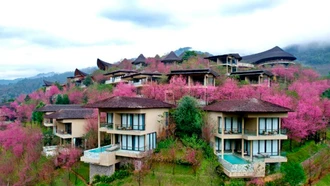
Currently, To Day flowers are primarily concentrated in the communes of Nam Khat, Pung Luong, De Xu Phinh, Lao Chai, and Khao Mang, with the densest blooms found in La Pan Tan. Despite enduring harsh conditions, including frost and snow blanketing the high slopes in winter, To Day trees exhibit remarkable resilience. As the sun emerges, the flowers burst into vibrant red and pink hues, lighting up vast areas and heralding the arrival of spring while dispelling the cold. The blossoms reach their peak beauty, painting the mountain slopes pink, from mid-December through late January, creating a stunning natural spectacle symbolic of the season's renewal and prosperity. The clusters of vivid red-pink flowers scattered across hillsides form breathtaking scenes, making To Day blooms a unique tourism asset, drawing visitors eager to experience this natural wonder.
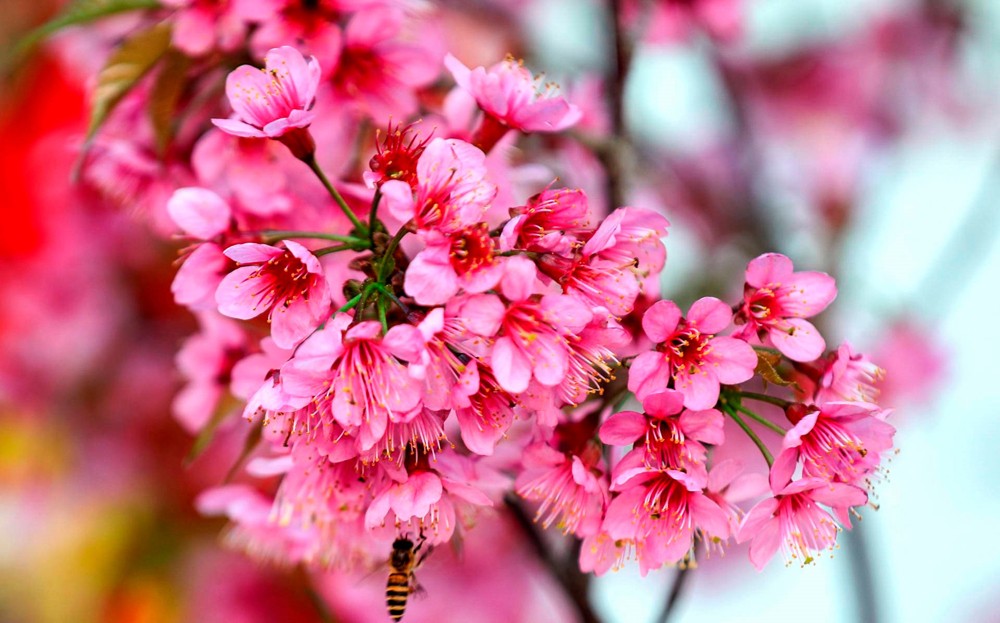
To Day flowers bloom in radiant pink.
From December 27, 2024, to January 2, 2025, Mu Cang Chai District is set to host the Hmong Khen Festival, the To Day Flower Festival, and other activities to celebrate the New Year. Highlights include street parades, the Hmong Khen Festival showcasing traditional Hmong culture through competitions and performances, the third annual To Day Flower Festival opening ceremony, paragliding adventures, and an art photography exhibition titled The Radiance of To Day Flowers. Visitors can also participate in activities such as the Journey to Hunt Clouds - Explore To Day Flowers, traditional Hmong celebrations like pounding sticky rice cakes, spinning top contests, folk games, cultural performances, and displays of Mu Cang Chai's specialty products alongside goods from partner districts.
Lương Thi Xuyen, Vice Chairwoman of the Mu Cang Chai District People's Committee, emphasized: "The To Day Flower Festival is held to promote the natural beauty and unique early spring festivals of the Hmong ethnic community in Mu Cang Chai. This event celebrates and advertises the region’s tourism potential while enhancing awareness of preserving and promoting the distinctive traditional cultural values of the area. It also aims to foster sustainable tourism connections between Mu Cang Chai and other localities in the Northwest region, creating a distinctive and high-quality tourism supply chain. The festival emphasizes innovative, unique, appealing, and eco-friendly tourism experiences tailored to each season.”
Thu Trang 

Có thể bạn quan tâm

Tin cùng chuyên mục

Yen Bai Organizes Career Counseling – Enrollment – Employment Fair for Students at Educational Institutions across the Province.

Yen Bai Recruits and Trains 81,504 People in Vocational Education

Since 2021, Yen Bai Province has recruited and provided vocational training for 81,504 people. Of these: 6,359 people (7.8%) received college-level training, 12,710 people (15.6%) received intermediate-level training, and 62,435 people (76.6%) received elementary-level training or training under three months. Each year, the province has supported vocational training for 4,000 to 5,000 rural laborers.
To date, the province has issued 103 planting area codes, covering over 1,165 hectares.

Yen Bai Issues 103 Planting Area Codes

In the first six months of 2025, Yen Bai Province issued two new planting area codes for domestic consumption. To date, the province has granted a total of 103 planting area codes, covering over 1,165 hectares.
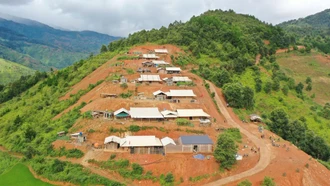
The Hong Nhi Pa Hamlet Resettlement Area, Lao Chai Commune.

Reviving Life After Natural Disasters

After suffering severe losses from flash floods and landslides in recent years, the people of Mu Cang Chai District have seen their lives gradually stabilize thanks to the determined involvement of local Party committees, authorities, and the united support of the wider community. New, spacious houses have risen to replace the ruins left by disasters, opening a new chapter of sustainable recovery in the remote highlands.
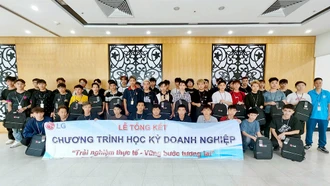
Students of Yen Bai Vocational College participating in the practical experience program of the enterprise semester in Hai Phong City.

Yen Bai: Over 1,200 Workers Connected and Recruited to Work at Enterprises in Hai Phong

Recently, Yen Bai Province has strengthened its cooperation between vocational education institutions and leading enterprises in Hai Phong through the signing of cooperation agreements. In cooperation on employment consulting, job referral, and labor supply with enterprises in Hai Phong City, Yen Bai Province has connected and recruited over 1,200 workers to work at businesses based in Hai Phong.
The mulberry cultivation and silkworm rearing model is generating income for farmers in Tran Yen District.

Tran Yen Aims to Expand Mulberry Cultivation to 1,200 Hectares by the End of 2025

Identifying mulberry cultivation and silkworm rearing as key sectors in agricultural development, Tran Yen District has recently focused on actively transforming its mulberry and silkworm production areas to enhance product value. Despite significant damage caused by Storm No. 3 in 2024, Tran Yen has set out multiple solutions to achieve its goal of cultivating 1,200 hectares of mulberry by the end of 2025.
With a range of comprehensive solutions, Yen Bai is enhancing its appeal to attract investors in the tourism sector.

Yen Bai Approves 26 Tourism Projects for Investment

In an effort to effectively develop tourism based on its natural and cultural resources, Yen Bai Province has recently focused on promoting and selectively showcasing its potential and strengths. The province has placed particular emphasis on infrastructure investment, especially in key tourism areas, to attract and invite investors.
People of Yen Bai actively participate in physical exercise and sports to improve their health.

Yen Bai: 45.5% of the Population Regularly Engages in Physical Exercise and Sports

In recent years, the movement of physical training and sports in Yen Bai Province has seen vibrant and rapid development, spreading widely throughout the local communities. Mass sports have flourished, and the number of people regularly participating in physical exercise and sports has steadily increased. Ethnic sports and traditional folk games continue to be preserved and promoted.
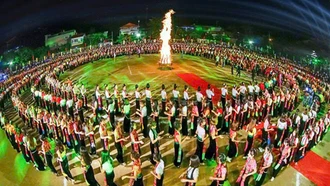
Local residents actively participate in cultural and artistic activities, enriching their spiritual life.

Yen Bai: Proportion of “Cultural Families” Increases by 9.1% Compared to the Beginning of the Term

In recent years, Yen Bai has made significant and comprehensive progress in building local culture and promoting human development, contributing effectively to the province’s sustainable growth. These achievements have also enhanced the efficiency of State management in the field of culture amid the challenges of a market-oriented economy and international integration.
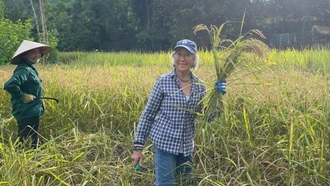
Tourists experience rice harvesting with local residents in Vu Linh Commune, Yen Binh District.

Combining Culture and Nature in Tourism Development

Blessed with pristine natural landscapes and a rich repository of ethnic cultural heritage, Yen Binh District in recent years has been gradually harmonizing conservation and development by building three pillars of tourism: placing people at the center, nature as the foundation, and culture as the identity — all aimed at sustainable growth.
Tourism establishments across the province are enhancing green, clean, and beautiful landscapes to attract summer visitors.

Yen Bai Ready for a Vibrant Tourism Season

Summer is a peak time for travel, entertainment, and recreation. To meet increasing visitor demand, Yen Bai Province has, from the beginning of each year, implemented various tourism promotion measures, strengthened state management in the sector, and encouraged businesses and individuals to develop tourism products and enhance technical infrastructure — all with the aim of attracting more tourists than in previous years.
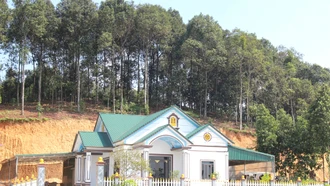
More spacious and modern houses are appearing in the highlands of Yen Bai.

No More “Blank Spots” in New Rural Development – A New Look for Mountainous Areas

There are no longer any "blank districts" in new rural development (NRD) — a remarkable achievement recently attained by Yen Bai Province, marking a significant milestone in the journey toward building prosperous and happy rural areas. The dramatic transformation of localities, particularly highland districts once faced with immense hardships, has affirmed the province’s correct direction and the spirit of unity and collective effort shared by the Party, government, and all ethnic communities in the province.
fb yt zl tw