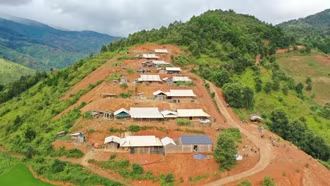
As part of the province-wide initiative to eliminate temporary and dilapidated housing, as of April 4, Yen Bai Province had commenced construction on 2,174 out of 2,208 planned homes, reaching 98.4% of the set target. Of these, 830 houses have been fully completed.
With the proactive engagement of the entire political system and the creative implementation efforts at the local level, the cities and districts of Yen Bai, Nghia Lo, Tram Tau, and Tran Yen have all commenced construction on 100% of the homes outlined in their respective plans. Other localities have also made significant progress, with construction initiation rates exceeding 95%. Currently, only 34 homes across the province have yet to break ground.
This housing support program, which prioritizes individuals with meritorious service to the revolution, aims to ensure that no citizen is left behind by providing safe and stable shelter. The initiative contributes to the province’s broader objectives of sustainable poverty reduction and social welfare. Yen Bai Province has continued to direct local authorities to mobilize resources effectively to expedite home construction for eligible households. Local governments have also been tasked with closely monitoring the situation and addressing any challenges that may arise on the ground. Concurrently, inspection and supervisory teams have been established to assess the progress and effectiveness of implementation in each locality.
In addition, the province has intensified communication efforts to ensure that all Party members, officials, and residents clearly understand the purpose and humanitarian significance of the program. These efforts aim to encourage public participation and garner practical support from various sectors of society.
Yen Bai Province is committed to completing the elimination of temporary and dilapidated housing by the end of 2025, thereby advancing its strategic vision of building a province that is "Green, Harmonious, Culturally Distinct, and Happy.â€
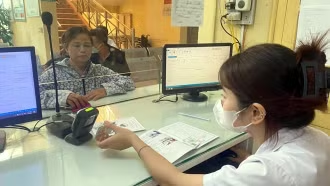
Since 2021, Yen Bai Province has recruited and provided vocational training for 81,504 people. Of these: 6,359 people (7.8%) received college-level training, 12,710 people (15.6%) received intermediate-level training, and 62,435 people (76.6%) received elementary-level training or training under three months. Each year, the province has supported vocational training for 4,000 to 5,000 rural laborers.
Since the beginning of the year, the management of crop seed, fertilizer, and pesticide trading activities in Yen Bai Province has been effectively implemented.
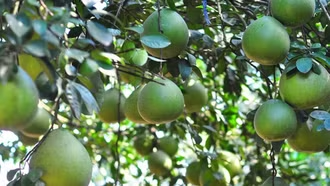
In the first six months of 2025, Yen Bai Province issued two new planting area codes for domestic consumption. To date, the province has granted a total of 103 planting area codes, covering over 1,165 hectares.
After suffering severe losses from flash floods and landslides in recent years, the people of Mu Cang Chai District have seen their lives gradually stabilize thanks to the determined involvement of local Party committees, authorities, and the united support of the wider community. New, spacious houses have risen to replace the ruins left by disasters, opening a new chapter of sustainable recovery in the remote highlands.
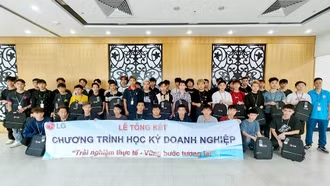
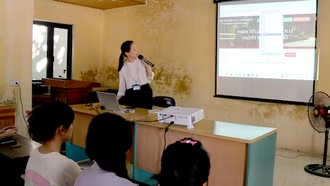
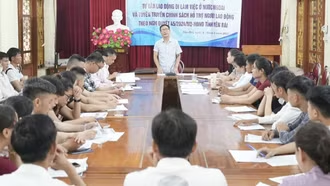
Recently, Yen Bai Province has strengthened its cooperation between vocational education institutions and leading enterprises in Hai Phong through the signing of cooperation agreements. In cooperation on employment consulting, job referral, and labor supply with enterprises in Hai Phong City, Yen Bai Province has connected and recruited over 1,200 workers to work at businesses based in Hai Phong.
In 2025, Yen Bai Province aims to provide vocational training for at least 4,000 rural workers, focusing on increasing the proportion of trained workers who receive certification. The province is also adding new and specialized vocational programs to attract more rural laborers to vocational training.
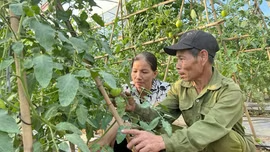
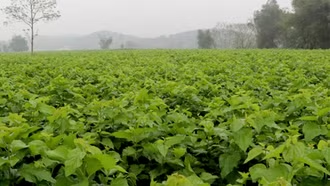
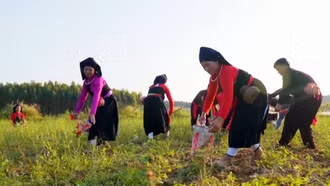
Identifying mulberry cultivation and silkworm rearing as key sectors in agricultural development, Tran Yen District has recently focused on actively transforming its mulberry and silkworm production areas to enhance product value. Despite significant damage caused by Storm No. 3 in 2024, Tran Yen has set out multiple solutions to achieve its goal of cultivating 1,200 hectares of mulberry by the end of 2025.
Amid growing consumer demand for transparency in product information, especially regarding agricultural products, traceability through barcodes and QR codes is considered an effective solution to ensure consumer confidence while also preventing commercial fraud.
Thanks to the development of unique and attractive tourism products across its key tourism areas, Yen Bai Province welcomed over 9 million tourist arrivals during the 2021–2025 period, including nearly 800,000 international visitors. Tourism revenue reached VND 7,189 billion, with an average annual growth rate of 32.7%.
In an effort to effectively develop tourism based on its natural and cultural resources, Yen Bai Province has recently focused on promoting and selectively showcasing its potential and strengths. The province has placed particular emphasis on infrastructure investment, especially in key tourism areas, to attract and invite investors.
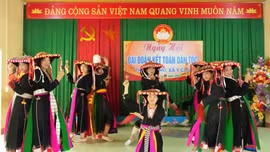
In recent years, the movement of physical training and sports in Yen Bai Province has seen vibrant and rapid development, spreading widely throughout the local communities. Mass sports have flourished, and the number of people regularly participating in physical exercise and sports has steadily increased. Ethnic sports and traditional folk games continue to be preserved and promoted.
In recent years, Yen Bai has made significant and comprehensive progress in building local culture and promoting human development, contributing effectively to the province’s sustainable growth. These achievements have also enhanced the efficiency of State management in the field of culture amid the challenges of a market-oriented economy and international integration.
As one of the first provinces nationwide to launch the “AI for Everyone†model, Yen Bai has now widely implemented the program across agencies, units, and localities, yielding significant results.
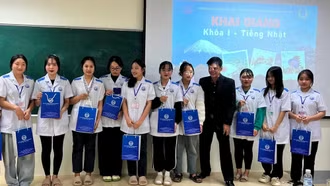
From 2021 to May 2025, Yen Bai Province has sent a total of 866 workers to Japan under official labor cooperation programs, through bilateral memorandums of understanding and intergovernmental agreements.
Blessed with pristine natural landscapes and a rich repository of ethnic cultural heritage, Yen Binh District in recent years has been gradually harmonizing conservation and development by building three pillars of tourism: placing people at the center, nature as the foundation, and culture as the identity — all aimed at sustainable growth.
Summer is a peak time for travel, entertainment, and recreation. To meet increasing visitor demand, Yen Bai Province has, from the beginning of each year, implemented various tourism promotion measures, strengthened state management in the sector, and encouraged businesses and individuals to develop tourism products and enhance technical infrastructure — all with the aim of attracting more tourists than in previous years.
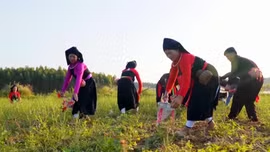
There are no longer any "blank districts" in new rural development (NRD) — a remarkable achievement recently attained by Yen Bai Province, marking a significant milestone in the journey toward building prosperous and happy rural areas. The dramatic transformation of localities, particularly highland districts once faced with immense hardships, has affirmed the province’s correct direction and the spirit of unity and collective effort shared by the Party, government, and all ethnic communities in the province.
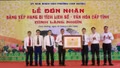
In 2023, the People’s Committee of Yen Bai Province issued Decision No. 1648/QÄ-UBND on the Preservation and Promotion of Tangible Cultural Heritage in Connection with Tourism Development within the province.
According to Decision No. 1648/QD-UBND issued in 2023, Yen Bai province is continuing to promote the preservation of intangible cultural heritage, aiming to safeguard and bring into play the unique traditional cultural values of ethnic groups in the area.