On October 22, 2018, the Party Central Committee in the 12th tenure issued Resolution No 36-NQ/TW on the strategy for the sustainable development of Vietnam’s marine economy to 2030 and vision to 2045, in which the overall goal by 2030 is to turn the country into a strong maritime nation.
The adoption of the Resolution demonstrates the Party’s strategic vision and consistent views on seas and islands in the cause of national construction and defence. The entire political system and the country’s people have been making major efforts to synchronously and drastically implement the measures and solutions in the Resolution to reach the targeted goals.
Over past years, the army and the people have recorded important achievements in carrying out the dual tasks of developing the marine economy and protecting the country’s sovereignty over its seas and islands.
In particular, all levels and branches from the central to local levels and the people have a deeper understanding about the key content of the Party’s viewpoint on protecting sovereignty and territorial integrity and maintaining a peaceful and stable environment to build and develop the country, as well as the legal basis and historical evidence of Vietnam’s sovereignty and maritime interests in the East Sea.
The political system, laws, and State management apparatus on seas and islands have also been improved and brought into play. After the Resolution on Vietnam’s maritime strategy to 2020 was adopted in 2007, the National Assembly and the Government issued a host of legal documents governing various fields relating to the country’s seas and islands, thereby creating a legal basis for the implementation of management, protection, and economic development of the seas.
On that basis, central and local ministries, departments, and branches have concentrated all resources on investing in building infrastructure and creating a stable and solid position for production, fishing activities, and resources exploitation. Many new policies have created favourable conditions for people to settle down on the islands.
Vietnam’s marine and coastal economy has posted many achievements to date, becoming a driving force in national development. The role and proportion of the marine economy in the national economy has increased markedly, with islands such as Van Don, Cat Hai, Con Dao, and Phu Quoc developing into economic centres.
In addition, propaganda on seas and islands and national defence and security education works have been bolstered, especially among fishermen and forces directly operating at sea and in coastal areas, helping to strengthen solidarity and the attachment between people on the islands and the armed forces, contributing to building stronger national defence and security on seas and islands.
Since 2021, Yen Bai Province has recruited and provided vocational training for 81,504 people. Of these: 6,359 people (7.8%) received college-level training, 12,710 people (15.6%) received intermediate-level training, and 62,435 people (76.6%) received elementary-level training or training under three months. Each year, the province has supported vocational training for 4,000 to 5,000 rural laborers.
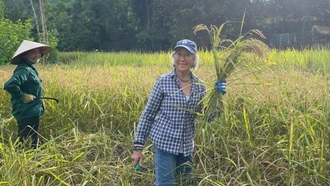
Since the beginning of the year, the management of crop seed, fertilizer, and pesticide trading activities in Yen Bai Province has been effectively implemented.
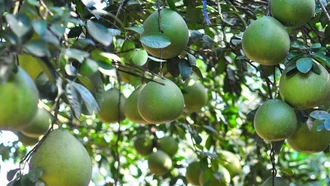
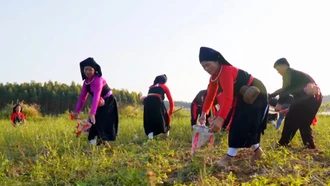
In the first six months of 2025, Yen Bai Province issued two new planting area codes for domestic consumption. To date, the province has granted a total of 103 planting area codes, covering over 1,165 hectares.
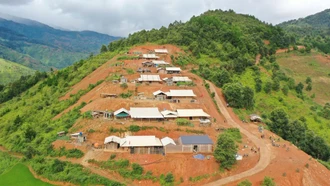
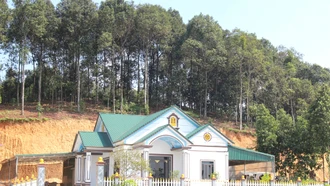
After suffering severe losses from flash floods and landslides in recent years, the people of Mu Cang Chai District have seen their lives gradually stabilize thanks to the determined involvement of local Party committees, authorities, and the united support of the wider community. New, spacious houses have risen to replace the ruins left by disasters, opening a new chapter of sustainable recovery in the remote highlands.
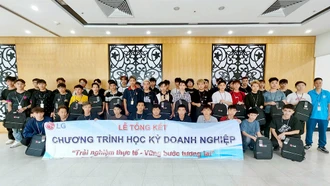
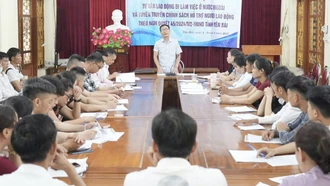
Recently, Yen Bai Province has strengthened its cooperation between vocational education institutions and leading enterprises in Hai Phong through the signing of cooperation agreements. In cooperation on employment consulting, job referral, and labor supply with enterprises in Hai Phong City, Yen Bai Province has connected and recruited over 1,200 workers to work at businesses based in Hai Phong.
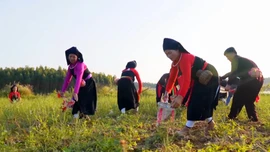
In 2025, Yen Bai Province aims to provide vocational training for at least 4,000 rural workers, focusing on increasing the proportion of trained workers who receive certification. The province is also adding new and specialized vocational programs to attract more rural laborers to vocational training.
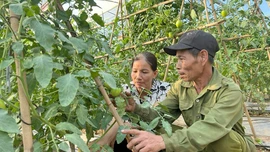
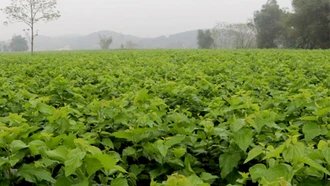
Identifying mulberry cultivation and silkworm rearing as key sectors in agricultural development, Tran Yen District has recently focused on actively transforming its mulberry and silkworm production areas to enhance product value. Despite significant damage caused by Storm No. 3 in 2024, Tran Yen has set out multiple solutions to achieve its goal of cultivating 1,200 hectares of mulberry by the end of 2025.
Amid growing consumer demand for transparency in product information, especially regarding agricultural products, traceability through barcodes and QR codes is considered an effective solution to ensure consumer confidence while also preventing commercial fraud.
Thanks to the development of unique and attractive tourism products across its key tourism areas, Yen Bai Province welcomed over 9 million tourist arrivals during the 2021–2025 period, including nearly 800,000 international visitors. Tourism revenue reached VND 7,189 billion, with an average annual growth rate of 32.7%.
In an effort to effectively develop tourism based on its natural and cultural resources, Yen Bai Province has recently focused on promoting and selectively showcasing its potential and strengths. The province has placed particular emphasis on infrastructure investment, especially in key tourism areas, to attract and invite investors.
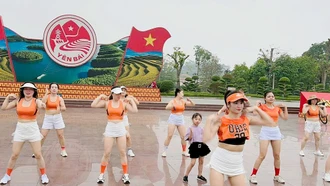
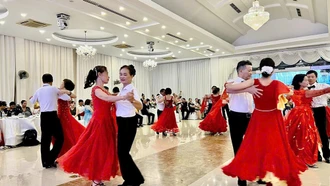
In recent years, the movement of physical training and sports in Yen Bai Province has seen vibrant and rapid development, spreading widely throughout the local communities. Mass sports have flourished, and the number of people regularly participating in physical exercise and sports has steadily increased. Ethnic sports and traditional folk games continue to be preserved and promoted.
In recent years, Yen Bai has made significant and comprehensive progress in building local culture and promoting human development, contributing effectively to the province’s sustainable growth. These achievements have also enhanced the efficiency of State management in the field of culture amid the challenges of a market-oriented economy and international integration.
As one of the first provinces nationwide to launch the “AI for Everyone†model, Yen Bai has now widely implemented the program across agencies, units, and localities, yielding significant results.
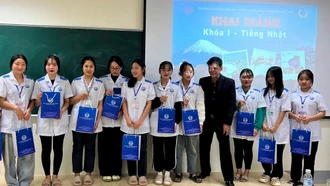
From 2021 to May 2025, Yen Bai Province has sent a total of 866 workers to Japan under official labor cooperation programs, through bilateral memorandums of understanding and intergovernmental agreements.
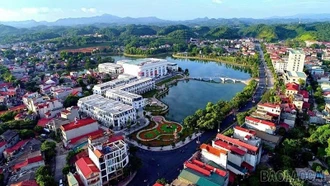
Blessed with pristine natural landscapes and a rich repository of ethnic cultural heritage, Yen Binh District in recent years has been gradually harmonizing conservation and development by building three pillars of tourism: placing people at the center, nature as the foundation, and culture as the identity — all aimed at sustainable growth.
Summer is a peak time for travel, entertainment, and recreation. To meet increasing visitor demand, Yen Bai Province has, from the beginning of each year, implemented various tourism promotion measures, strengthened state management in the sector, and encouraged businesses and individuals to develop tourism products and enhance technical infrastructure — all with the aim of attracting more tourists than in previous years.
There are no longer any "blank districts" in new rural development (NRD) — a remarkable achievement recently attained by Yen Bai Province, marking a significant milestone in the journey toward building prosperous and happy rural areas. The dramatic transformation of localities, particularly highland districts once faced with immense hardships, has affirmed the province’s correct direction and the spirit of unity and collective effort shared by the Party, government, and all ethnic communities in the province.
In 2023, the People’s Committee of Yen Bai Province issued Decision No. 1648/QÄ-UBND on the Preservation and Promotion of Tangible Cultural Heritage in Connection with Tourism Development within the province.
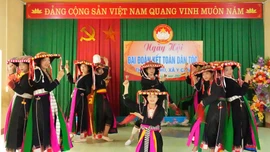
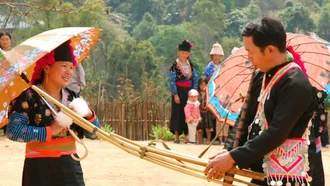
According to Decision No. 1648/QD-UBND issued in 2023, Yen Bai province is continuing to promote the preservation of intangible cultural heritage, aiming to safeguard and bring into play the unique traditional cultural values of ethnic groups in the area.